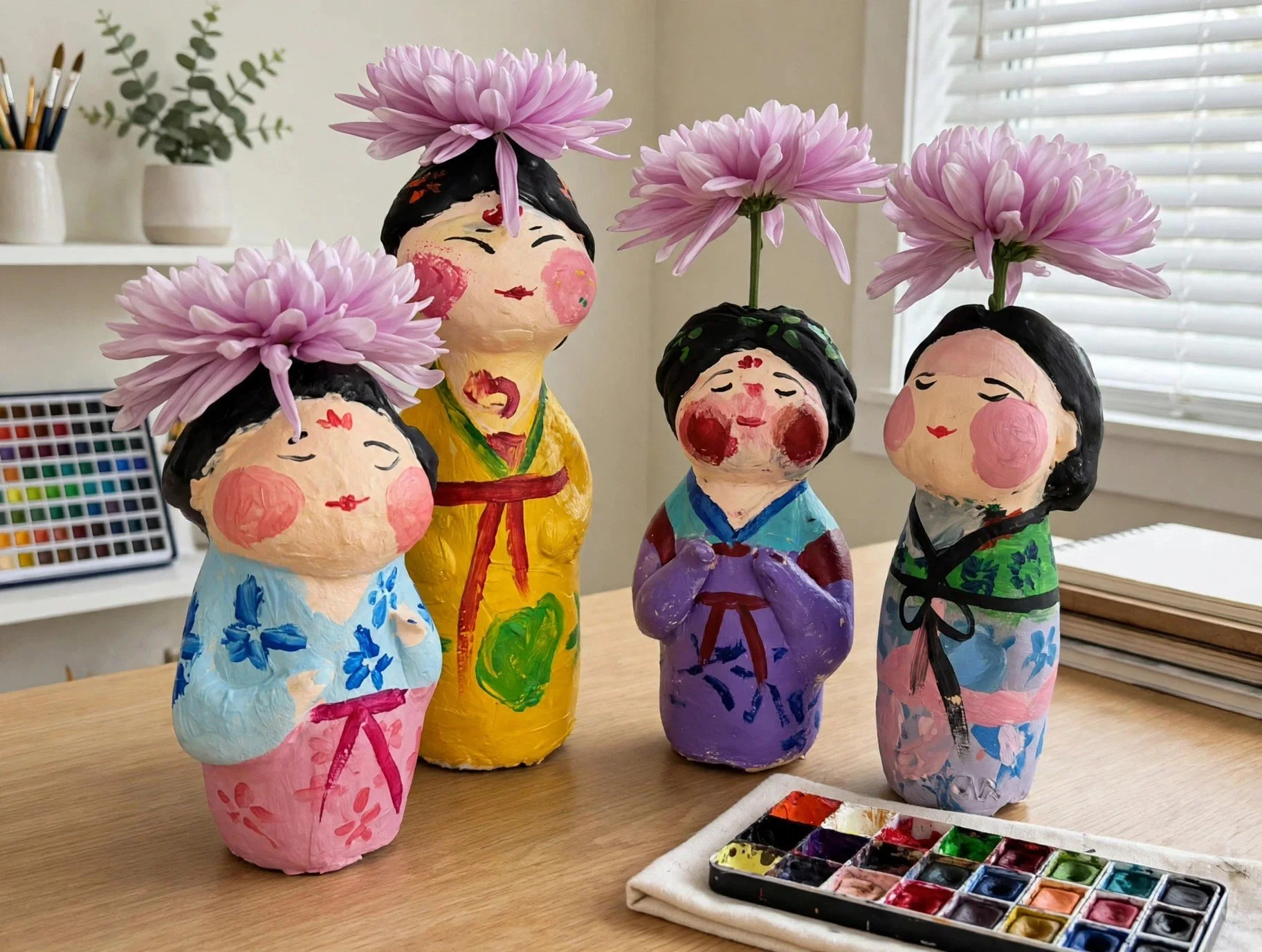
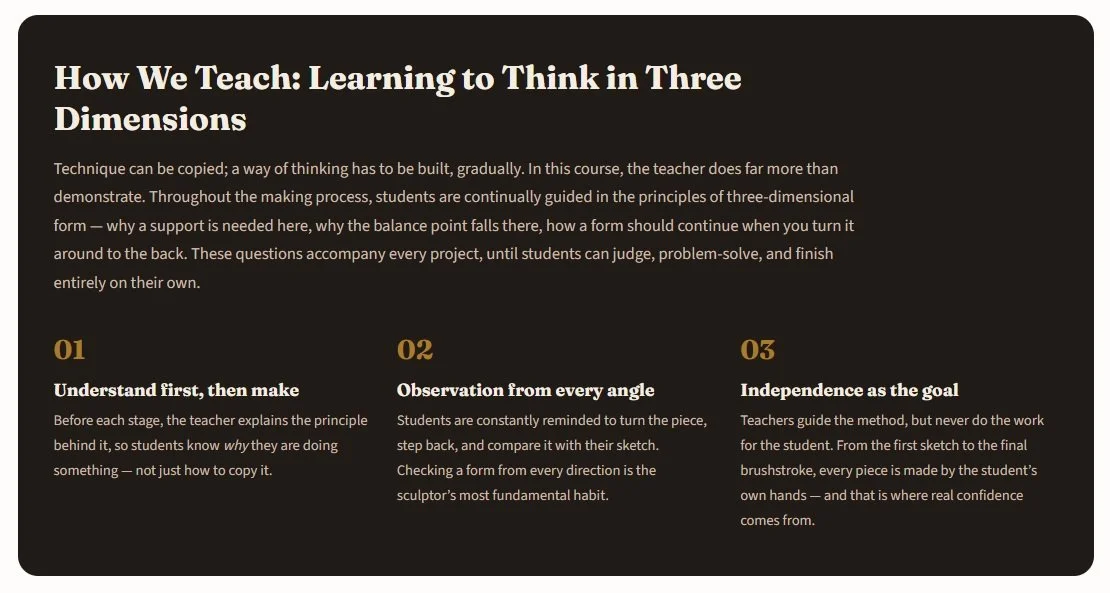
3D Sculpture Foundation Course
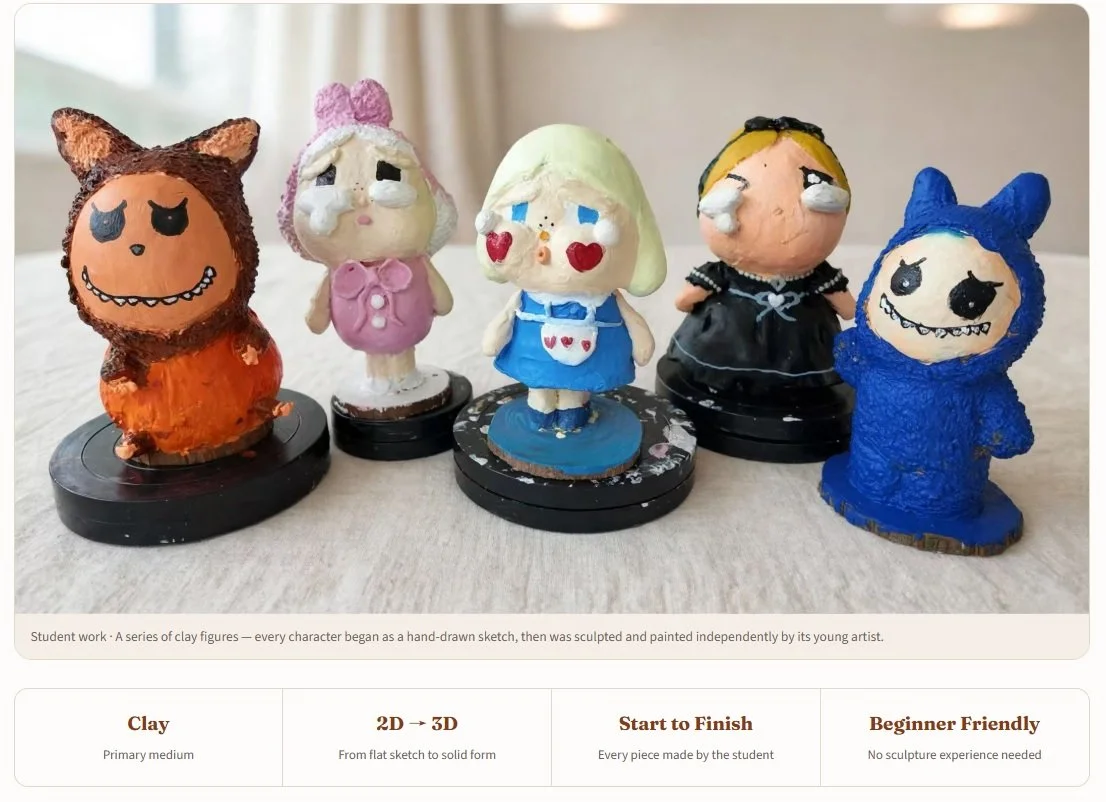
From a flat sketch to a sculpture you can hold.
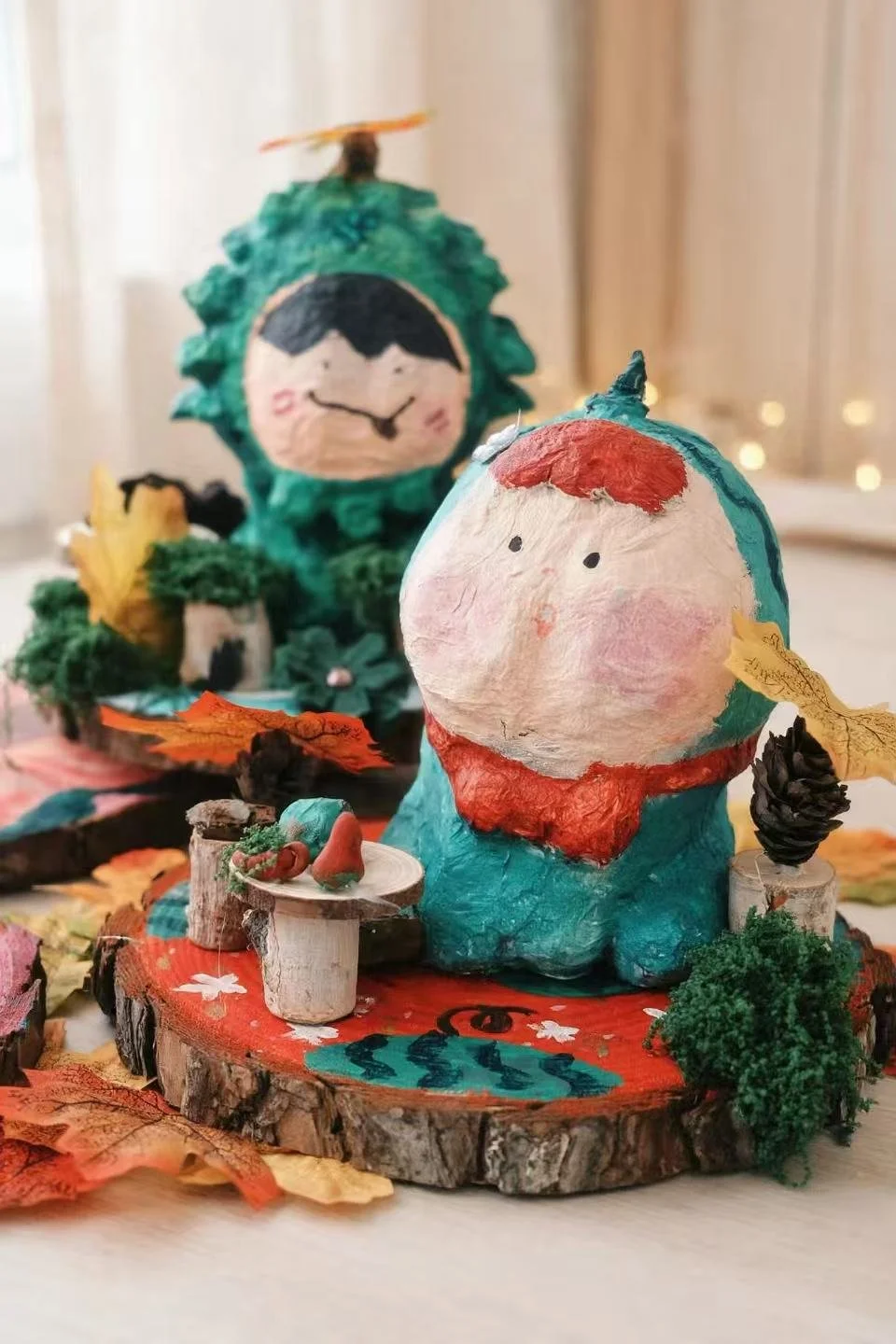
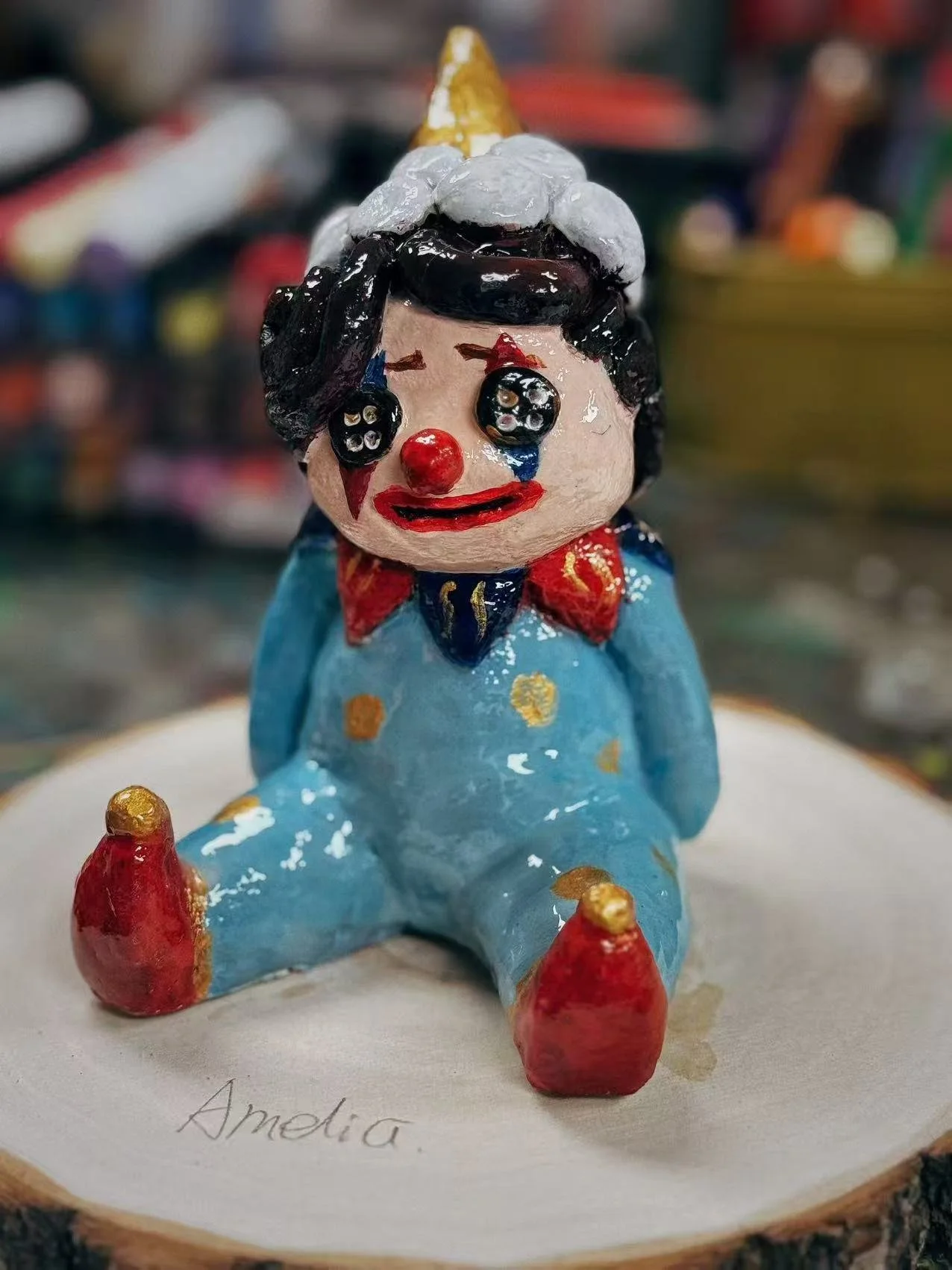
This course takes students through a complete creative journey — beginning with a two-dimensional sketch on paper, and ending with a real, three-dimensional work they have shaped with their own hands. It is genuinely challenging, and that is exactly what makes it so engaging: the moment a figure that once existed only in a child’s imagination stands steadily on the table is an experience no flat artwork can replace.
Course Overview: Why Sculpture?
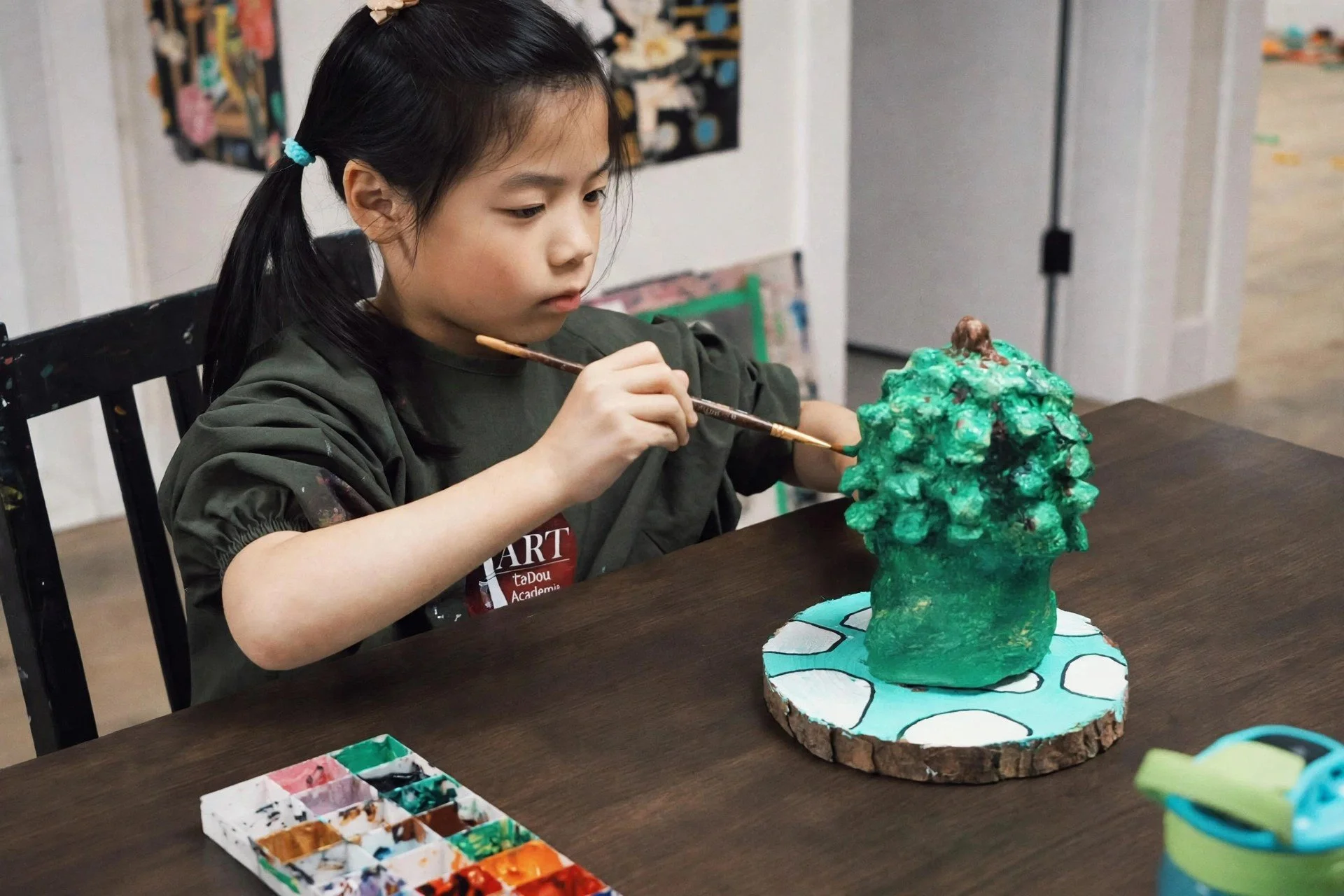
Drawing teaches children to observe and express themselves on a flat surface. Sculpture asks something more: to truly understand how a form exists in space — front, side, and back; height, depth, and balance. Every angle has to work. That is the heart of this foundation course. It is not simply “making something out of clay”; it is a systematic training in spatial thinking.
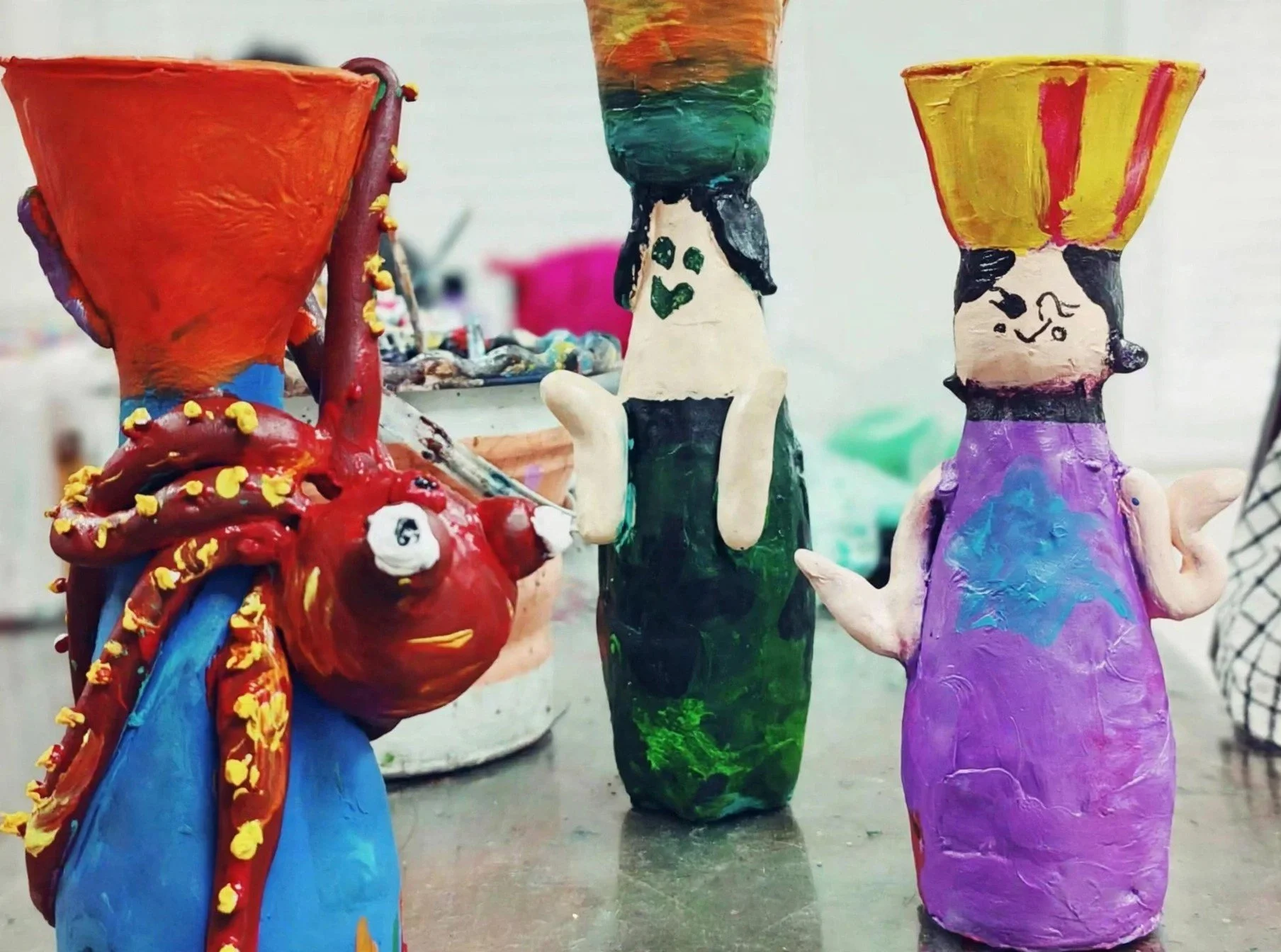
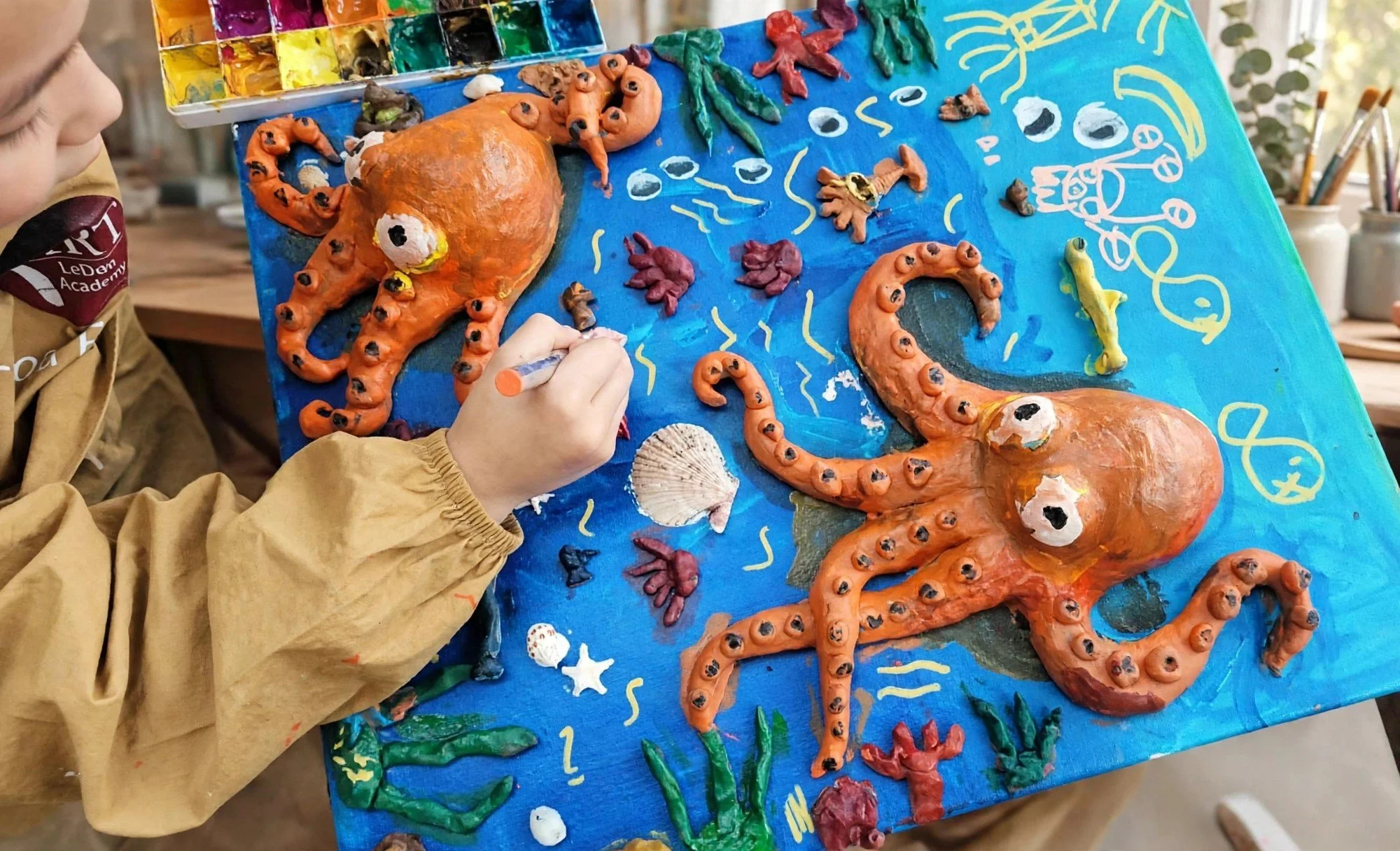
At Ledou Fine Art, the course follows a clear creative path. Students first develop their idea on paper, turning an imagined image into a design they can build from. Then, working in clay, they carry that flat image into three dimensions step by step — building the structure, blocking in the main form, carving the details, refining the surface, and finally painting the finished piece. Drawing, design thinking, and hands-on problem-solving are woven together into a single, coherent process.
We welcome children from every cultural background to bring their own stories into the studio — a favourite animated character, a figure from a family celebration, an imaginary friend, a scene from a beloved book. In this class, every idea is taken seriously, and every idea can become a one-of-a-kind finished work to take home.
From Flat to Form: A Four-Step Journey
01
Observation and the Flat Sketch
Everything begins with looking and drawing. Students choose the figure they want to make, study its features closely, and draw a design sketch — including front and side views where needed — so that an idea held in the mind becomes specific and buildable for the very first time.
Choose a subject and study its key features
Draw a design sketch; set the proportions and the pose
Turn an “idea” into a “blueprint” to build from
02
Building the Structure and Main Form
Clay work begins by solving one problem first: will it stand? Following the sketch, students build the basic structure and supports, then block in the overall form with larger masses of clay. No details yet — only a form that holds together, with a stable centre of balance.
Build the inner structure and supports from the sketch
Block in the main form and the overall proportions
Keep turning the piece to check balance and silhouette from every side
03
Shaping and Carving the Details
With the main form standing, students work inward layer by layer: features, expression, clothing, texture. Here the teacher focuses on the relationship between part and whole — however lovely a detail may be, it must serve the form as a whole.
Shape features, expression, and gesture layer by layer
Carve costume details and surface textures
Constantly check each detail against the sketch — and against the whole
04
Refining, Painting, and Finishing
The final stage is about completion: refining the surface, resolving weak spots, and painting the piece — with a colour plan that, like everything else in the course, comes from the student’s own design. A work that began as a sketch on paper is now fully born.
Refine the surface; resolve seams and rough areas
Paint the piece following their own colour design
Present the finished work beside its original sketch